
 Lab Integration
Unidirectional vs Bidirectional Lab Analyzer Interfaces
A lab analyzer interface connects laboratory instruments with your LIMS so that results move automatically into the system. This eliminates manual typing of results, one of the most common sources of errors in a lab. There are two types of interfaces.
Unidirectional interface
A unidirectional interface is a one-way link: data flows only from the analyzer to the LIMS. The system does not send test orders or worklists back to the instrument.
- The sample is loaded on the analyzer
- The analyzer runs the test and generates results
- The analyzer sends results directly to the LIMS
- The LIMS receives, processes and stores the results
- Validated results are compiled into reports
Bidirectional interface
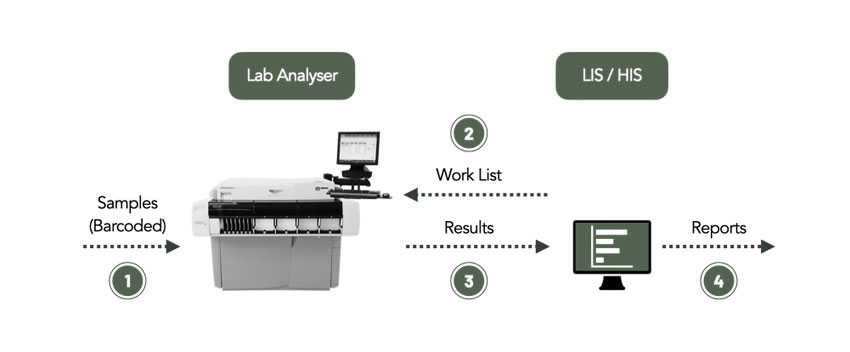
A bidirectional interface is a two-way link. The LIMS sends test orders to the analyzer, and the analyzer sends results back — so the operator does not need to program tests on the instrument.
- Barcoded patient samples are loaded into the analyzer
- The LIMS sends the test order for each sample to the analyzer
- The analyzer performs the requested tests automatically
- Results are sent back to the LIMS
- The system verifies, stores and flags abnormal results for review
Which one should you choose?
Unidirectional interfaces are simple and work well for lower-volume instruments. Bidirectional interfaces save the most time and reduce errors further on high-volume analyzers, because both ordering and resulting are automated. BITLIMS supports both types, and our team can advise on the best option for each of your machines.
Back to Blog